
11:30 AM - 12:00 PM

Types of radiation therapy for breast cancer : Difference between proton and photon radiation therapy for breast cancer.

Presenter
Dr Sudha Sommappa
Consultant Radiation Oncologist
Abstract of Topic
Types of Radiation Therapy for Breast Cancer:
Difference Between Proton and Photon Radiation Therapy
Dr. Sudha Sommappa
Radiation Therapy Types:
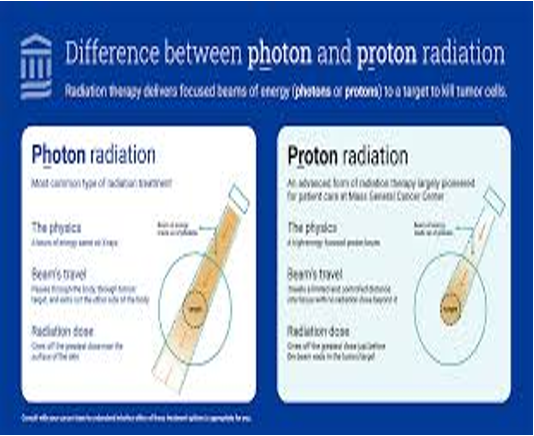
1. Photon Radiation Therapy (Conventional Radiotherapy):
o Uses high-energy X-rays or gamma rays (photons) to target and destroy cancer cells.
o Widely available and commonly used in breast cancer treatment.
o Penetrates tissues and deposits energy along the path, affecting both cancerous and some surrounding healthy tissue.
2. Proton Radiation Therapy:
o Uses charged particles (protons) that have a unique physical property called the Bragg peak, allowing precise energy deposition at a specific depth.
o Minimizes radiation exposure to surrounding healthy tissues and critical organs like the heart and lungs.
o Particularly beneficial for left-sided breast cancers or cases needing re-irradiation.
Key Differences:
Feature | Photon Therapy | Proton Therapy |
Radiation Type | X-rays (photons) | Charged particles (protons) |
Tissue Penetration | Passes through tissue, affecting tissues before and beyond tumor | Stops sharply at tumor site (Bragg peak) |
Damage to Healthy Tissue | Higher exposure | Lower exposure |
Side Effects | Potentially more heart/lung toxicity | Reduced risk of cardiac and pulmonary damage |
Availability | Widely available | Limited availability, higher cost |
Indications | Standard breast cancer cases | Complex cases, pediatric patients, re-irradiation, left-sided tumors |
Conclusion:
Proton therapy offers a more targeted, tissue-sparing option, reducing collateral damage, especially critical in left-sided breast cancer. Photon therapy remains effective and widely used but with potentially higher exposure to adjacent organs.