
8:30 AM - 9:15 AM

Nutrigenomics and Epigenetics in Precision Nutrition: Functional Food Interventions for Gene Regulation in Type 2 Diabetes Prevention and Management

Presenter
Dr. Vaidehi Ulaganathan
Assistant Professor in Nutrigenetic and Clinical Nutrition
Abstract of Topic
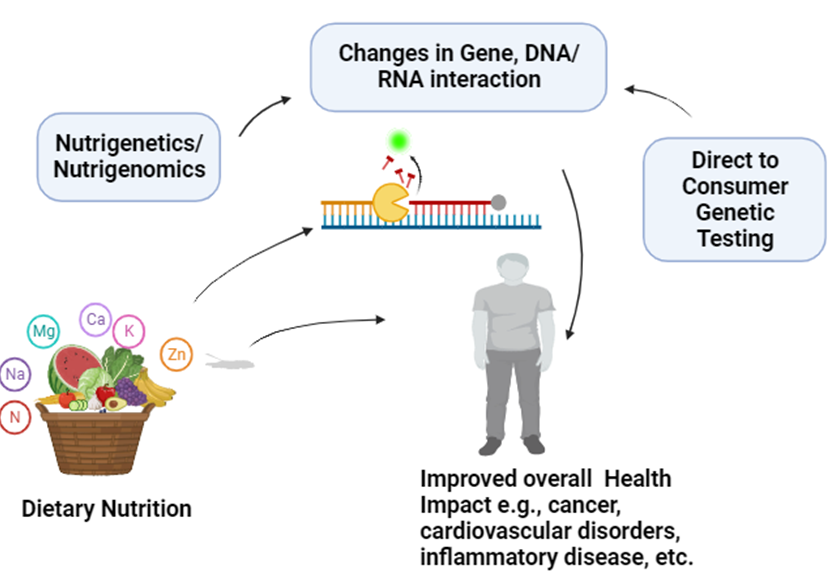
Nutrigenomics and Epigenetics in Precision Nutrition: Functional Food Interventions for Gene Regulation in Type 2 Diabetes Prevention and Management
Vaidehi Ulaganathan
Department of Food Science and Nutrition, Faculty of Applied Sciences, UCSI University, Kuala Lumpur.
Abstract:
Nutrigenomics explores how dietary interventions modulate gene expression related to insulin resistance and β-cell dysfunction, central to type 2 diabetes mellitus (T2DM). By identifying genetic polymorphisms, personalized nutrition can improve T2DM prevention and management. Functional foods rich in bioactive compounds influence key metabolic and inflammatory pathways, contributing to glycemic control. Soy protein reduces SREBP-1 expression and lipogenic enzymes, maintaining insulin homeostasis and preventing fatty liver. Isoflavones like daidzein activate PPAR-α/γ and inhibit the JNK pathway, reducing adipose inflammation, while soyasaponins lower ROS production and NFκB activation. Fucoxanthin upregulates GLUT4, enhances UCP1 in white adipose tissue, downregulates pro-inflammatory adipokines (TNF-α, MCP-1, IL-6, PAI-1), and modulates IRS-1/PI3K/AKT and AMPK signaling pathways.Whole-grain cereals contain β-glucans and arabinoxylans, which exert prebiotic effects and regulate CYP7A1 expression, particularly in SNP rs3808607-G allele carriers. These fibers activate Dectin-1, reducing IL-10 and TNF-α, while promoting IL-4 and IL-23, improving insulin sensitivity via SCFA production. Camellia seed oil modulates PPARγ, SREBP, NFκB, IGF2BP2, and TCF7L2, influencing lipid metabolism, inflammation, and glucose homeostasis. These findings highlight the potential of selected functional foods in epigenetic modulation for T2DM management. Further human trials and large-scale interventions are warranted to establish precision nutrition strategies and experiential learning such as in culinary medicine to translating nutrigenomic research into practical dietary interventions for diabetes prevention and treatment.