Exosomes vs. PRP in Wound Healing
Presented by Dr. Leroy Robello
Functional, Integrative and Regenerative Medicine Practitioner
This presentation compares Exosomes and Platelet-Rich Plasma (PRP) in the context of wound healing, highlighting their origins, mechanisms, and clinical implications.
Key Highlights:
Source & Composition:
- Exosomes are cell-free vesicles derived from stem cells, rich in microRNAs, proteins, and growth factors.
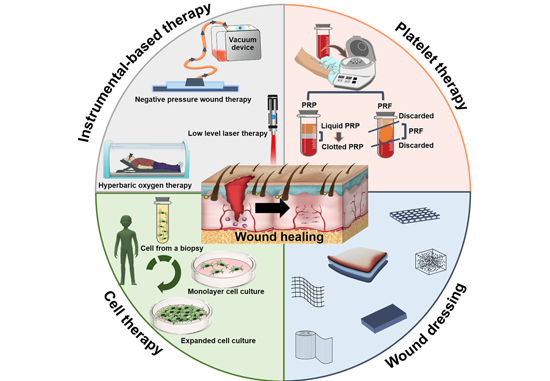
- PRP is derived from the patient’s own blood and contains platelets and cytokines.
Mechanism of Action:
- Exosomes deliver regenerative signals without cells, modulating inflammation and promoting tissue repair.
- PRP releases growth factors upon activation, stimulating healing and angiogenesis.
Potency & Standardization:
- Exosomes offer stronger, more targeted effects, particularly in chronic or non- healing wounds; can be standardized.
- PRP is variable in efficacy due to patient health and preparation methods.
Immunogenicity & Regulation:
- Exosomes have minimal immune risks but face stricter regulatory controls.
- PRP is low-risk and more widely accepted for clinical use.
Cost & Accessibility:
- Exosomes are more expensive due to complex processing.
- PRP is cost-effective and accessible.
Clinical Implications:
Exosomes are ideal for advanced, treatment-resistant wounds and anti-aging therapies requiring precision regeneration.
PRP remains a reliable, affordable choice for acute wounds and general tissue repair, especially when patient-derived solutions are preferred.
This comparative analysis underscores a tailored approach—selecting either modality based on wound complexity, patient profile, and treatment goals.